“The task of the modern educator is not to cut down jungles, but to irrigate deserts.” - C.S. Lewis

Sunday, 7 July 2013

TOPIC 3

TOPIC THREE
I felt topic three is more lengthy and complex than topic two. As we discussion about information systems, so I learned about computer based information system, types of information system that are used in organization.

CBIS (Computer Based Information System): 

This systems use computer technology to accomplish some or all their tasks which is made by hardware, software, database, telecommunications procedures and people for decision making purpose. Support competitive advantage, support business making, support business operations and process are function of CBIS. Mainly we use computer based system in organization, business sector to keep much faster than manual system. And files within a computer based information system can be password – protected so that only authorized user can access the data.


Components of CBIS

Hardware: Hardware can be a single PC, a single main frame or networks of computers. It also includes physical device to control the process of input and output like keyboard, mouse and modem.

Software: different types of software used in Computer Based Information System (CBIS). Application software where includes the words processing  graphic, database, project management  System software which is controls and maintains the operations of the computer and its devices for examples windows 7, Linux extra. And programming language is a tool to write or create programs such as FOTRAN, COBOL extra.

 People: Those who are involved with the system or using the system. For example IT manger, system developer, system analyst and design.

Data: Consists of facts, text, graphic, figure that can be recorded and that have   specific meaning.

Procedure:  Instructions and rules to design and use information system. For example some procedures describe when each program should be run.

 TYPES OF INFORMATION SYSTEM


*Transaction Processing System (TPS) 
*Management Information System (MIS)
*Decision Support System (DSS)
 *Executive Support System (ESS)
 *Expert Support System (ES)
 *Other is (Office Support System, Knowledge Support System)
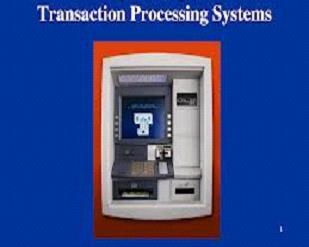

Transaction processing system (TPS) is and information processing system that perform and records the data from everyday operations throughout every division or department in the organization. It will help the organization to control overtime of processing because transaction processing system is really fast to process data.  For example ATM machine, online booking ticket, fast food restaurant process customer order extra. And there are two methods of Transaction Processing System.

First is OLTP-Online Processing system which is a direct processing system. And it provides direct results to the system operator or customer. Second one is batch processing that collects transactions in groups, called batches, and processes them together for example telephone account, CG PA system. 

 Session two still we were in topic three where we learnt about system methodology. Firstly we learnt about what is ISD (Information System Development)? Steps of ISD systems, what is methodology, types of system methodologies.  


Information System Development (ISD) is a theoretical model used in Project Management that describes the stages involved in an information system development project. This Systems development is the process of defining, designing, testing, and applying a new software application or program. In same class we learnt about methodology it is a set of methods and principles to perform a specific activity. Procedures, methods and tools are key element of methodology and there is various types’ information system development which is as below:

*Gane and Sarsons
*Information Engineering  
*Jackson System Development
*Prototyping iterative approach
*Structured approach
*Soft System Methodology
*Ethics 


TOPIC 2

TOPIC TWO

It was about ICT(Information Communication Technology) and IT(Information Technology) where I learned about differentiate between IT & ICT  and usage of ICT in daily life. firstly we learnt about whats the difference between ICT &IT. ICT refers Information Communication Technology which is provide us information by telecommunications  ICT includes cell phones, wireless networks, internet and ICT especially we used educational side to learning such as school, college , university so on. IT refers Information Technology which is include software, hardware, the internet nowadays in industrial side people use IT  to managing the networks and computers.
Similarly , season two we learnt about concept of information technology and daily usage of ICT in different places.

INFORMATION TECHNOLOGY CONCEPT

Information Technology Architecture : it’s a map or plan of the information assets in an organization which is help us to in planing replace to new technologies.
Information technology infrastructure: is physical facilities like IT components  computer software, hardware and communication technologies), IT service(service provide for customer), IT personal(people work with information technology), that supports  all organization.
At present time with out  technology people can not imagine their life. The technology sector has changed and helped in many places for example:

                                                                                               Education

 Business 


Banking 


Tuesday, 4 June 2013

Bibliography


(Gower, 1999) (Hussin, 2007) (Ismali, 2005) (Man, 2000) (Reed, Powerhouse of the Uranium Enrichment Industry Seeks an Exit, 2013) (Smith, 2009) (Watson.W.A & Anderson.L.J, 1999)

Gower, C. (1999). Direction in conservation biology. Jounal of animal ecology(3), 215-244.

Hussin, R. (2007). Pelancongan global dan kepentingan teknologi. Pemikir, 2(2), 189-207.

Ismali, R. (2005, 10). Desktop Publishing in Information Mareketing. PC Magazine, pp. 21-23.

Man, E. V. (2000). Computer viruses. New Jersey: Prentice Hall.

Reed, S. (2013, 5 27). Powerhouse of the Uranium Enrichment Industry Seeks an Exit. Retrieved 5 28, 2013, from http://dealbook.nytimes.com: http://dealbook.nytimes.com/2013/05/27/ powerhouse -of-the-uranium-enrichment-industry-seeks-an-exit/?ref=business

Sakiam, S. (2009, 4 1-15). Living up to its names. Times, pp. 21-23.

Smith, R. (2009, July 17). The Environmental Problem the world is loath to address. Retrieved May 28, 2013, from http://articles.baltimoresun.com: http://articles.baltimoresun.com/2009-07-17/news/0907160033_1_population-growth-sustainable-population-slow-population

Watson.W.A & Anderson.L.J. (1999). Sociology 2000. Boston.

Tuesday, 21 May 2013

Topic One (Information Technology)


This is the first week of Introduction to Information Technology class where first day we introduce our self and our lecture told us about Course Outline, Assessment and lecture’s information. So in this week I learned about the difference between data and information, and problems associated with information management but before this we go through the following topic like what is computer? Types of computer, Generation of computer so on. In my view Computer is collection of devices that function as a unit. It’s an electrical device which is provided faster methods of communication. Computer has played a significant role in the communication system today. The most basic collection includes a computer CPU (Central processing Unit), a mouse, a keyboard, and a monitor.

The basic operations of computer:

Computers perform basic types of operations: Input, Output, Processing, Storage, these four operations characterize everything that computers do.

Input: Computer input is whatever is typed, submitted or transmitted to a computer system. It's the collection letters, numbers, images etc.

Output: output is the result produced by a computer. It’s including reports, documents, music, graphs, and pictures.

Processing: Process is the operation of data as per given instruction. it is totally internal process of the computer system.

Storage: Storage is the process of keeping information on a computer.

Similarly week one contained generation of computer.  Generation of computer is not as long as human generation as it is man-made device. Generally there are five generation of computer as mentioned under.

First Generation: first generation was used form 1940-1950, it use vacuum tube were used in this generation of computer. This generation of computer were large in size a bit noisy and its speed is very low. The storage capacity of first generation is also very low. The storage capacity of first generation is also very low. They were used for specific purpose.

Second Generation: second generation computer was made on use from 1950-1964; Vacuum tube was replaced by Transistors in second generation computer. Though it is more reliable third generation computer established in 1964-1974 and transistor was replaced by Integrated Circuit (IC).


Third Generation: The third generation computer was more faster, reliable and its storage capacity is more than first and second generation computer.


Fourth Generation: Similarly fourth generation computer is established in 1974 and it is still using process. Very large Scale Integration and Ultra Large Scale Integration are used in this generation of computer. Fourth generation of computer are more reliable and comfortable to use as it as more storage capacity, speed is higher than past generation of computer.


Fifth Generation: Last but not the list, fifth generation of computer is in the construction process, it is not completed yet. It will be much faster than past generation computer and it will use natural language.


Categories of Computers : we can categorize on basic of size, capability, speed and price. They are as under:

  1. Embedded computers
  2. mobile computers
  3. Personal computers
  4. Mid range computers
  5. Super computers
  6. Mainframes 
  7. Hybrid computers 
   Normally all these above computer have their own purpose and they are different from each other with their unique purpose. Embedded computers is use for specific purpose. Example CCTV, traffic light etc. Mobile computers are used for computing and internet purpose. Example your self phone. Personal computer is our desktop which is used for our private purpose. More over Mid range  computer used for hosting data and programs available to small group of users. Mainframe computer are used for the large company or large industries. Mainframe computer are so large in  size they required large number of users to operate them. Super computer, this computer are used for scientific and research purpose they are the fastest computer. The good example of this computer are those computer used far and to fly rocket in the sky etc. lastly hybrid computers which is combination of computers that are capable of inputting and outputting in both digital and analog signals. For example webcam, telephone, mobile etc. 

Week one further contains about difference between data and information.where I realized that data is raw facts and its normally stored in a database or a file it can be something simple and apparently random and useless until it is organized. For example each student’s test score is one piece of data.  But information is when data is proceed  organized, structured or presented in a given context so as to make it useful, it is called information. for example The class' average score or the school's average score is the information that can be concluded from the given data.


Friday, 5 April 2013

Week Ten

Finally we came to end of the trimester, so in week ten I learnt about introduction about synthesis, summarizing vs. synthesizing. Synthesis is combining two or more summaries, it refers to writing about printed texts, drawing together particular themes. Synthesis exactly reports information the sources using different phrases and sentences; it is organized in such way that readers can immediately see where the information from the sources cover and synthesis make sense of the sources and helps the reader understand them in greater deepness. 


Summarizing vs. Synthesizing
Summarizing is a basic reading technique where we identify the key points and organizing the thoughts, a listing of the parts. We shows what the original authors wrote and proves an understanding of the overall meaning. And summarizing usually comes at the end. 

Synthesizing is advanced reading technique where we pull information, highlight the important points and we also draw our own conclusions. In synthesizing we Combines and compares information from different sources then we create something new pieces of writing and focuses on both main ideas and details.